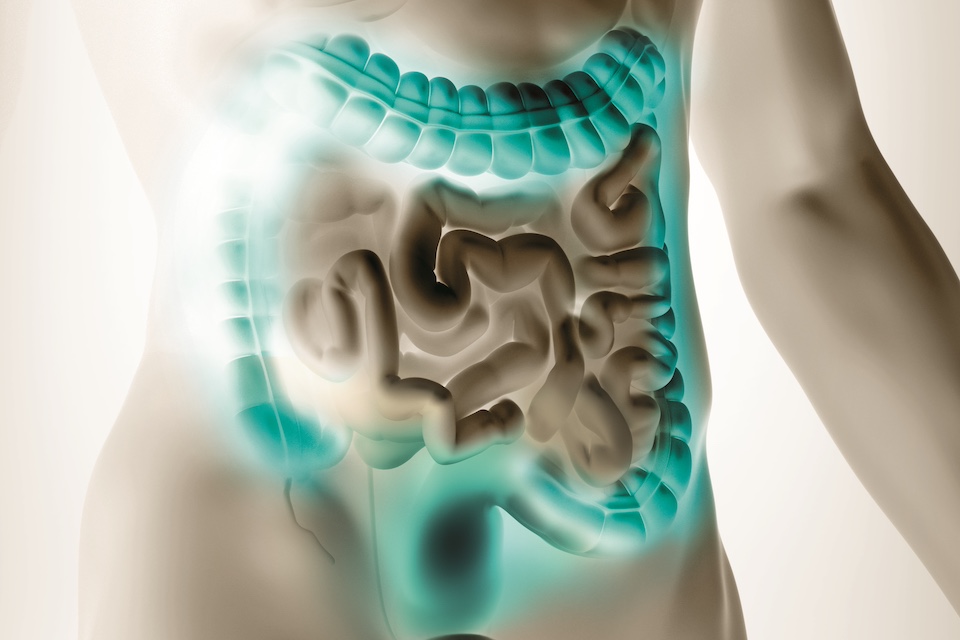

Inflammatory bowel disease, or IBD, is the umbrella term for two chronic conditions, Crohn’s disease and ulcerative colitis, in which the immune system mounts a sustained and misdirected attack on the lining of the gut. In Crohn’s disease the inflammation can appear anywhere from the mouth to the anus, most often in the last segment of the small intestine, and it reaches through the full thickness of the bowel wall.1 Ulcerative colitis is typically confined to the colon and rectum and to the surface layer of the mucosa.2 Both follow a pattern that includes stretches of remission broken by flares of abdominal pain, diarrhea, bleeding, urgency, fatigue and weight loss.
Once considered diseases of North America and Europe, IBD is now rising across nearly every industrialized and industrializing region. Several million people live with the condition worldwide, including an estimated three million adults in the United States, and incidence is climbing fastest in countries that are only now adopting a Western diet and lifestyle. Unfortunately, there is no cure. Most patients are diagnosed in their teens, twenties or thirties and manage the disease for the rest of their lives.3
The cause of IBD remains elusive. The prevailing model invokes one or more interactions between a genetically susceptible immune system, environmental triggers, and the community of microbes that lives in the gut. That last element, the microbiome, has moved steadily from the margins of the field toward its center, and it is where some of the most promising new therapeutic ideas are taking shape.
A microbial role in the disease
The clearest early clue that gut bacteria are not innocent bystanders came from the operating room. When surgeons diverted the fecal stream away from an inflamed segment of a Crohn’s patient’s intestine, the inflammation often resolved; when the flow of intestinal contents was restored, it returned. Something carried in the lumen of the gut, rather than the tissue itself, appeared to be feeding the fire.4
Sequencing studies provided another clue. The gut communities of people with IBD are consistently less diverse than those of healthy people, with a loss of anti-inflammatory species and an overgrowth of others, in particular members of the Proteobacteria that include Escherichia coli.5 One strain type has drawn particular attention. Adherent-invasive E. coli, or AIEC, was first isolated from the ileal tissue of Crohn’s patients more than two decades ago and has since been found there far more often than in healthy controls, in more than a third of Crohn’s cases by many estimates.6 That rate may even be underreported due to the poor sensitivity of the test.
AIEC does exactly what its name suggests. Unlike the harmless E. coli that most of us carry, it attaches to and invades the cells lining the intestine, exploiting at least one receptor, CEACAM6, that is unusually abundant on the gut epithelial cell surface of Crohn’s patients. It then survives inside the macrophages meant to destroy it, replicating within those immune cells and prompting them to release TNF-alpha, one of the central drivers of the inflammation that defines the disease.7 Crohn’s-associated genetic variants, including those affecting the NOD2 and autophagy pathways, weaken a cell’s ability to clear exactly this kind of intracellular invader, which ties a patient’s inherited risk directly to how their body handles bacteria like AIEC.
AIEC is not thought to be the sole cause of Crohn’s the way a single microbe causes cholera. Instead, it behaves as a pathobiont: a resident organism that, in a susceptible person with the wrong immune setting, expands, invades and sustains inflammation. For the substantial subset of patients who carry it, AIEC does not behave like a commensal E. coli strain would in a healthy gut but, rather, acts as a driver of disease. That raises the important question: what happens if you take AIEC away?
Why current treatments only go so far
Almost every approved IBD therapy works by tamping down inflammation rather than removing what provokes it. Aminosalicylates and corticosteroids blunt the inflammatory response broadly. Immunomodulators and the biologic drugs that reshaped the field, the anti-TNF antibodies and the newer agents targeting integrins and interleukins, block specific arms of the immune system with far more precision. These medicines have spared many patients from surgery and given others their lives back. Without question, they possess enormous value to patients and to the doctors who prescribe them.
They are not without limits, though. A large share of patients, commonly cited at around a third, never respond to a given biologic at all, and many who do respond lose that response over time as the body adapts or raises antibodies against the drug, so a medicine that worked one year can stop working the next.8 Despite an expanding menu of options, a striking number of Crohn’s patients still advance to requiring surgery within a decade of diagnosis.9 Because these drugs suppress immune function, they also carry real risks, including serious infections and, less often, liver toxicity, and they are expensive enough to strain the budgets of patients and health systems alike.
The deeper problem is more fundamental. None of these treatments are designed to address why the immune system is inflamed in the first place. They manage a symptom, albeit the most important one, but leave the provocation in place. If a specific organism helps drive the disease in a definable group of patients, then broadly dampening immunity is a blunt answer to a precise problem. A treatment that removed the inflammatory provocation while leaving the rest of the immune system, and the rest of the microbiome, intact would be a different kind of medicine.
Phages: a precision instrument for the microbiome
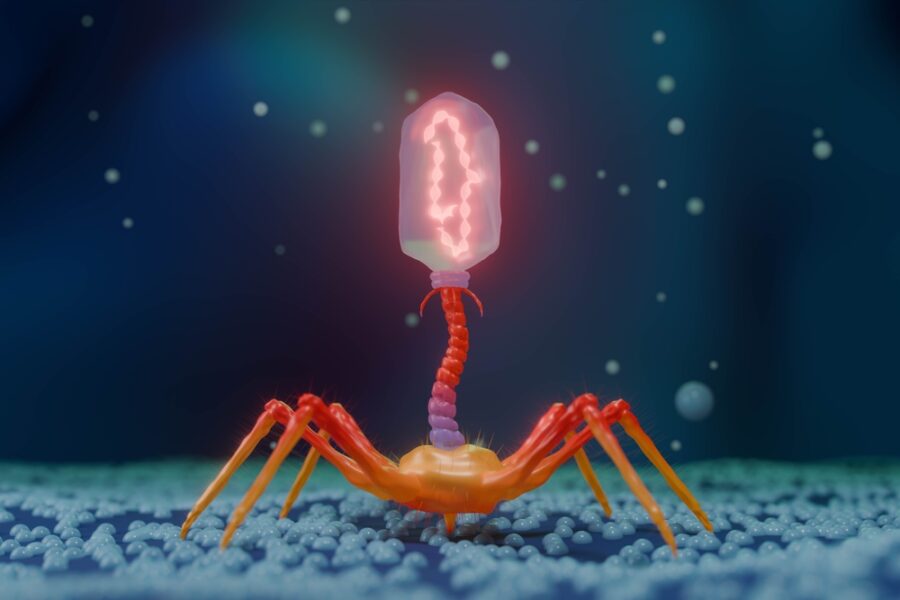
Bacteriophages, or phages, are a tool nature has been using all along. They are viruses that infect bacteria, and only bacteria; they do not harm human cells. Each phage is also remarkably selective, often recognizing a single species or even a subset of strains within a species. That selectivity is exactly what a microbiome-targeting therapy needs. An antibiotic may (or may not) clear a patient’s AIEC, but regardless, it indiscriminately kills the beneficial bacteria the gut depends on, and broad antibiotic use carries its own well-documented costs. A phage aimed at AIEC can, in principle, eliminate or greatly reduce that one organism and leave the surrounding community standing, and its members can fill the now-vacant niche.
For a disease that may be driven by a specific pathobiont, this is an appealing proposition. And most importantly, it’s a rational approach: an oral drug, with a safety profile that regulators already regard as favorable, delivered locally to the gut to directly address the suspected cause of disease. Instead of managing inflammation, a consequence of the disease, the therapy removes a driver.
Phages are not a new idea. They were used against bacterial infections a century ago, before antibiotics eclipsed them. What is new, and what makes them worth taking seriously now, is the ability to engineer them.
Why phage engineering makes the difference
Wild-type phages pulled straight from the environment come with drawbacks that have held phage therapy back for decades. Their host range is often too narrow: a single natural phage may kill some AIEC strains and miss many others, and AIEC varies genetically from patient to patient. Bacteria also evolve resistance to natural phages quickly, much as they do to antibiotics, so a lone phage can lose its efficacy as the target bacteria adapt.
Engineering and cocktail optimization answer both of these problems. Phages with complementary reach can be combined into a defined multi-phage cocktail that covers the clinically relevant AIEC strains. And crucially, these phages can be given a second weapon. Locus Biosciences engineers its phages to carry DNA that encodes a payload, so that when a phage infects its target, it also results in the production of an antibacterial protein that is released from the dead bacterium. The result is a dual mechanism: the phage kills the way lytic phages naturally do, and the antibacterial protein kills, through a different mode of action, bacteria that have not yet been infected by a phage. Two independent modes of attack make it far harder for the bacterium to escape this therapy, which speaks directly to the resistance problem that has plagued both antibiotics and wild-type phages.
This is not only theory. LBP-EC01, an engineered phage therapy that Locus developed for the treatment of recurrent urinary tract infections (UTIs) caused by drug-resistant E. coli, has already shown early promise in the clinic. In Part 1 of the two-part Phase 2 ELIMINATE trial, published in The Lancet Infectious Diseases, all patients in the final evaluated subset (n=16) saw their UTI symptoms resolve, the large majority (88%) had their E. coli reduced below the threshold used to define microbiologic cure (<103 CFU/mL), and, notably, no resistance to the therapy was detected in the bacteria recovered afterward.10 This serves as proof-of-concept for the platform’s ability to produce drugs capable of targeting E. coli within the body.
LBP-AIEC01, the company’s orally administered engineered phage cocktail for treating Crohn’s disease, was developed using the same intelligent automation platform as LBP-EC01. It was motivated, in part, by the striking similarities between uropathogenic E. coli, which cause UTIs, and AIEC, a suspected driver of Crohn’s disease: not only do they possess genetic similarity, but both attach to and invade host mucosal cells of the bladder and intestine through similar mechanisms. This has led some to speculate that UPEC may just be AIEC in the bladder.11 LBP-AIEC01 has proven effective at eradicating AIEC and reducing inflammation in multiple animal models of colitis, and the FDA has recently cleared Locus’s Investigational New Drug (IND) application for a first-in-human trial.
An idea worth testing
The case for targeting AIEC in Crohn’s disease rests on two decades of consistent observation that gut bacteria help drive the inflammation, that this particular organism is enriched in a definable group of patients, and that removing it might address a cause rather than a consequence of the disease. Academics are beginning to realize the potential of phages in IBD as well,12 but academic researchers generally lack a drug development motive and seldom possess the necessary infrastructure. The case for doing it with an engineered phage rests on the extraordinary diversity and adaptability of E. coli, which cannot be readily addressed by wild-type phages, but which a cocktail developed with high-throughput automation and AI, armed with a second antibacterial mechanism, is more likely to defeat.
Much still has to be shown, but a precision therapy that subtracts a suspected microbial driver, spares the rest of the microbiome, and sidesteps broad immunosuppression is exactly the sort of departure from conventional thinking that the field desperately needs. LBP-AIEC01 is a test of these ideas, and it is one that the IBD community deserves to see.
References
- Torres J, Mehandru S, Colombel JF, et al. Crohn’s disease. Lancet. 2017;389(10080):1741–1755.
- Ungaro R, Mehandru S, Allen PB, et al. Ulcerative colitis. Lancet. 2017;389(10080):1756–1770.
- Ng SC, Shi HY, Hamidi N, et al. Worldwide incidence and prevalence of inflammatory bowel disease in the 21st century: a systematic review of population-based studies. Lancet. 2017;390:2769–2778.
- Rutgeerts P, Goboes K, Peeters M, et al. Effect of faecal stream diversion on recurrence of Crohn’s disease in the neoterminal ileum. Lancet. 1991;338:771–774.
- Ni J, Wu GD, Albenberg L, Tomov VT. Gut microbiota and IBD: causation or correlation? Nat Rev Gastroenterol Hepatol. 2017;14:573–584.
- Darfeuille-Michaud A, Boudeau J, Bulois P, et al. High prevalence of adherent-invasive Escherichia coli associated with ileal mucosa in Crohn’s disease. Gastroenterology. 2004;127:412–421.
- Palmela C, Chevarin C, Xu Z, et al. Adherent-invasive Escherichia coli in inflammatory bowel disease. Gut. 2018;67:574–587.
- Ben-Horin S, Chowers Y. Review article: loss of response to anti-TNF treatments in Crohn’s disease. Aliment Pharmacol Ther. 2011;33:987–995.
- Frolkis AD, Dykeman J, Negrón ME, et al. Risk of surgery for inflammatory bowel diseases has decreased over time: a systematic review and meta-analysis of population-based studies. Gastroenterology. 2013;145:996–1006.
- Kim P, Sanchez AM, Penke TJR, et al. Safety, pharmacokinetics, and pharmacodynamics of LBP-EC01, a CRISPR-Cas3-enhanced bacteriophage cocktail, in uncomplicated urinary tract infections due to Escherichia coli (ELIMINATE): the randomised, open-label, first part of a two-part phase 2 trial. Lancet Infect Dis. 2024;24(12):1319–1332.
- Barrios-Villa E, Martínez de la Peña CF, Lozano-Zaraín P, et al. Comparative genomics of a subset of Adherent/Invasive Escherichia coli strains isolated from individuals without inflammatory bowel disease. Genomics 2020;112, 1813–1820.
- Jackson K, Galipeau HJ, Hann A, et al. Phage intervention improves colitis and response to corticosteroids by attenuating virulence of Crohn’s disease-associated bacteria. Sci Transl Med. 2026 Jul 8;18(857):eadz4589.