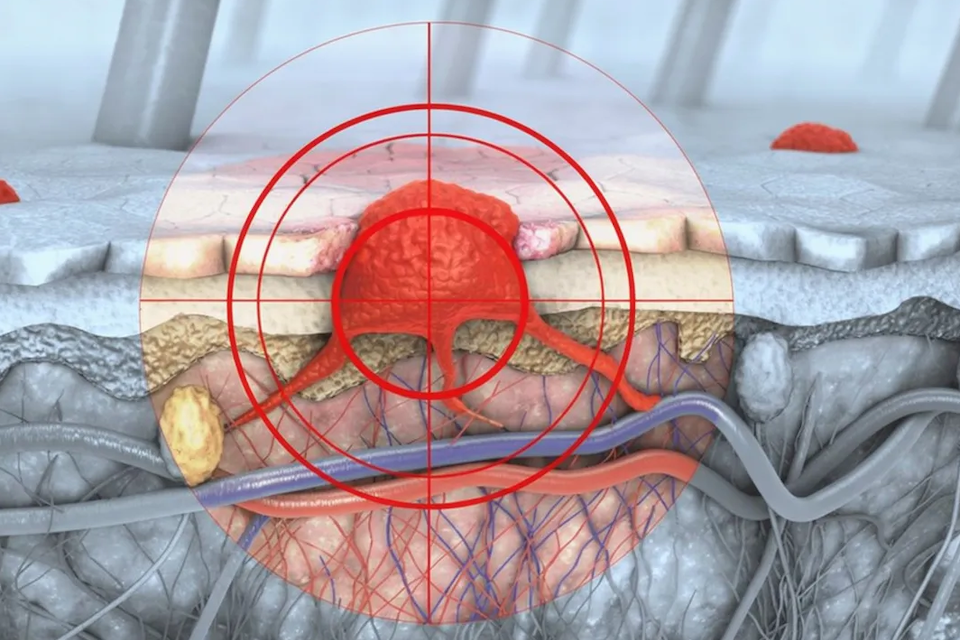
Microbiotica, a clinical-stage biopharma company developing a pipeline of oral precision microbiome medicines called live biotherapeutic products (LBPs), announces that all primary and secondary objectives were met in its advanced melanoma (MELODY-1) Phase 1b trial.
MELODY-1 was an international Phase 1b study to evaluate the safety and tolerability of MB097 given in combination with KEYTRUDA® (pembrolizumab), MSD’s anti-PD-1 therapy, in patients with advanced melanoma who demonstrated primary resistance to anti-PD-1 therapy. The trial recruited 41 patients at clinical centres in the UK, France, Italy, and Spain.
- MB097 could be administered safely in combination with KEYTRUDA with no serious adverse events (SAEs) related to MB097
- The nine bacterial strains contained in MB097 demonstrated robust engraftment after dosing, with enhanced engraftment following vancomycin preconditioning
- Encouraging signals of efficacy were seen in this difficult to treat, primary-refractory advanced melanoma patient population, suggesting that microbiome modulation with MB097 may overcome resistance to anti-PD-1 therapy.
Detailed results of the study will be presented at a scientific conference during 2026.
Commenting on the study results, Dr Pippa Corrie from Cambridge University Hospitals NHS Foundation Trust, the National Co-ordinating Investigator for the MELODY-1 study said,
“There is increasing evidence that the microbiome plays a crucial role in patients’ response to immune checkpoint inhibitors. Clinical benefit has been reported with Faecal Microbiota Transplantations (FMT), while MB097 capsules taken orally each day affords an easy and reproducible way of modifying the microbiome. The MELODY-1 study results show that MB097 is well tolerated, with encouraging early signs of efficacy in a very difficult to treat metastatic melanoma patient population with primary resistance to anti-PD-1 based immunotherapy, in whom there is a significant unmet need.”
In this first-in-human, randomised open-label clinical trial, all patients received MB097 and pembrolizumab for up to six months. Half of the participants also received vancomycin before starting the co-therapy to determine whether it helps the bacterial strains in MB097 engraft in the gut more efficiently. Participants benefiting from the treatment at the end of the initial six-month period have entered an extension study and can continue to receive pembrolizumab for up to an additional 18 months. The results of this extension phase will be reported in due course.
MB097 is a once daily, orally administered LBP consisting of a defined consortium of nine strains of commensal bacteria designed to enhance the efficacy of immune checkpoint inhibitors (ICIs). The MELODY-1 study is designed to investigate the safety, tolerability, and initial signals of efficacy of MB097 in advanced (metastatic) melanoma, in combination with KEYTRUDA® (pembrolizumab), MSD’s (Merck & Co., Inc., Rahway, NJ, USA) anti-PD-1 therapy, in patients with cutaneous melanoma who have failed to respond to immunotherapies (study identifiers NCT06540391; MSD KEYNOTE-E75; 023-507377-17). MSD has supplied KEYTRUDA to Microbiotica.
Dr Robert Tansley, Microbiotica’s Chief Medical Officer, said,
“We are encouraged by these positive data on safety and engraftment. With early signs of efficacy, we look forward to further analysis from the trial respondents. The results provide the foundation to proceed to larger controlled studies in a broader melanoma patient population and we are excited by the potential to deliver a new option to maximise patients’ potential to respond to anti-PD-1 therapy.”
Tim Sharpington, Microbiotica’s CEO added,
“This is our second clinical trial to report positive results, following the success of our Phase 1b study of MB310 in ulcerative colitis earlier this year. This is further validation of our clinic-first discovery platform and precision microbiome medicine development.”